Specifically for the discussion of the A-mount DSLR range
Forum rules
No more than three images or three external links allowed in any post or reply. Please trim quotations and do not include images in quotes unless essential.
With apologies to Dr. Harout. It was a bit cold but not freezing tomight.
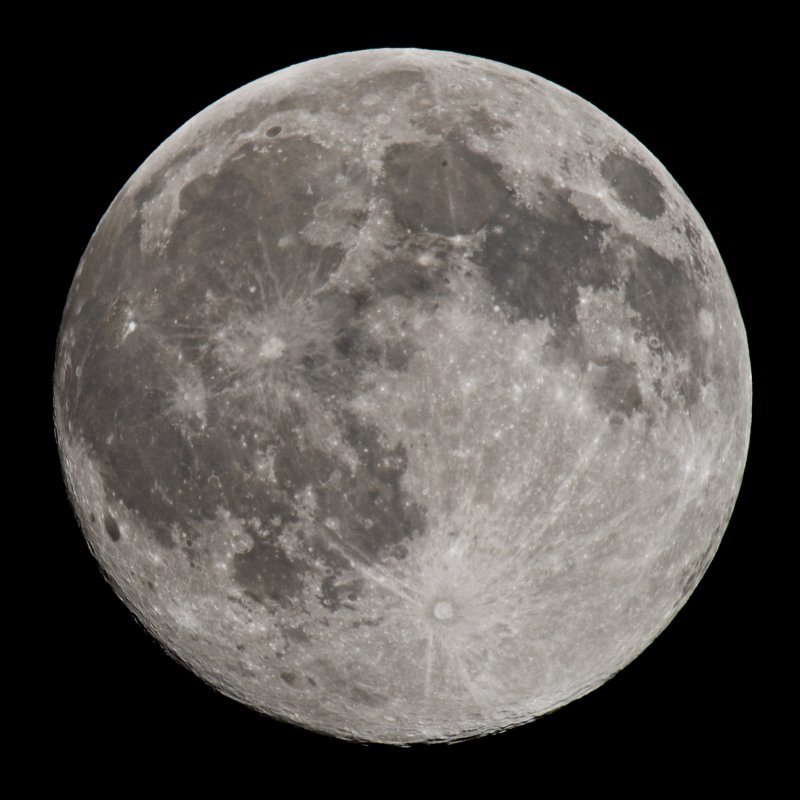
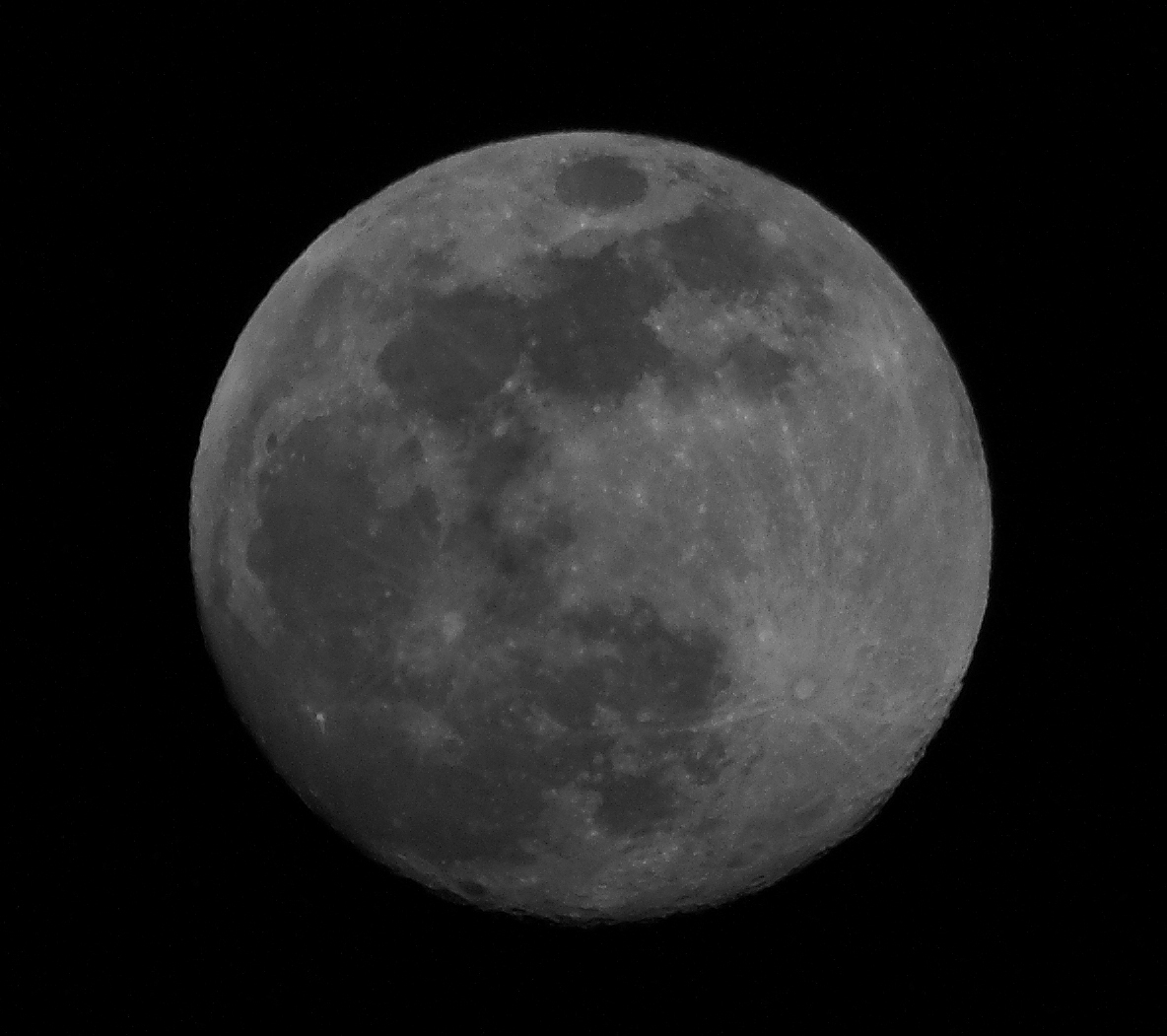
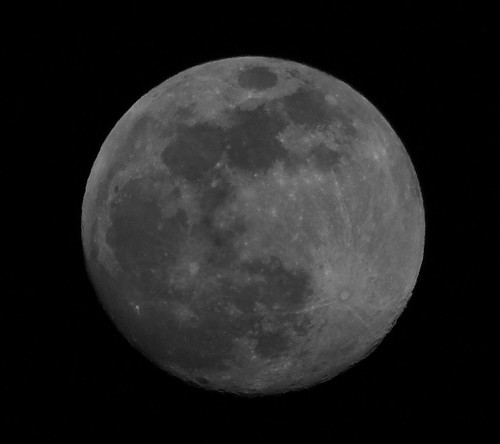
Here is a hand held shot with Tamron 200-500 of the moon. I plan to do a tripod shot tomorrow.
This is the first time I tried moon shot with A900. Tammy at 500mm and converted to BW in Picasa
and cropped. I know it is a bit on the dark side but I want to have enough margin. I could have tried
at 1/500s. Will try that tomorrow. As always all comments and feed back is appreciated.
Excellent moon shot, though mayhap it would look even better if reduced in size onscreen just a little......wow look how bright the impact crater Aristarchus (42Km wide and twice as deep as the Grand Canyon) is, but then, it is the brightest object on the moon.
Greg
Hi Sury.
The shot is not bad for a handheld one. But 1/1600 speed is way too much I think. Try with slower shutter speeds and increase the exposure. Don't know if it was matrix metering or not, but since it's a B&W scene (sort of) don't rely on the metering of the camera.
Nicely done, anyway.
Thank you all for your kind comments. I will try tonight (weather permitting) again and at 1/500s as well as experiment
with tripod, raw and bracketing. I will also try with A700 as well.
Dr. Harout, the focus was spot but the metering was wide area.
Greg,
Pardon my ignorance. Could you point where on the image is Aristarchus Crater? Just curious.
Sury
Greg Beetham wrote:Excellent moon shot, though mayhap it would look even better if reduced in size onscreen just a little......wow look how bright the impact crater Aristarchus (42Km wide and twice as deep as the Grand Canyon) is, but then, it is the brightest object on the moon.
Greg
Greg Beetham wrote:Excellent moon shot, though mayhap it would look even better if reduced in size onscreen just a little......wow look how bright the impact crater Aristarchus (42Km wide and twice as deep as the Grand Canyon) is, but then, it is the brightest object on the moon.
Greg
Although it's in another thread too, I'll repeat Richard Kilpatrick's Birmingham city centre Moon - shot when he was first trying out the 300-800mm Sigma EX DG with 2X:
The 300-800mm seems to be an excellent lens all round but at over £5000 it's not a lens to buy lightly.
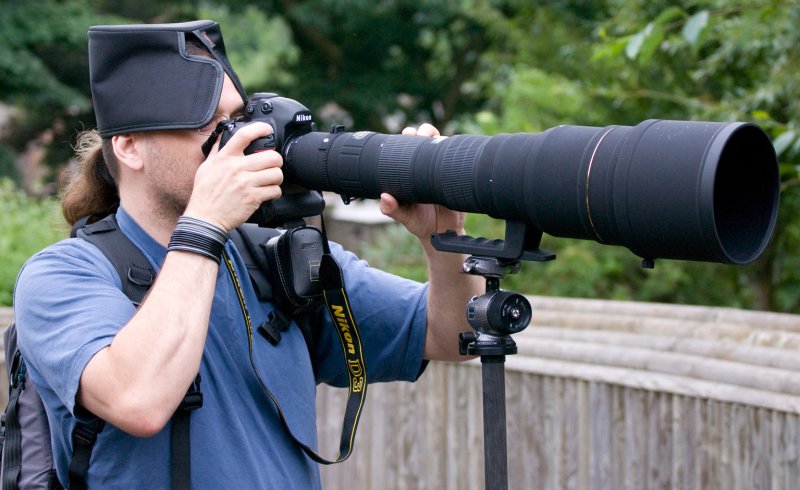
Here it is in use - with Richard wearing the lens cap as a hat when it started raining, since there is nowhere else to put such a large lens cap -
Greg Beetham wrote:Excellent moon shot, though mayhap it would look even better if reduced in size onscreen just a little......wow look how bright the impact crater Aristarchus (42Km wide and twice as deep as the Grand Canyon) is, but then, it is the brightest object on the moon.
Greg
I thought it would gain some resolution by decreasing the size a tad (just seemed a little soft at the large size), now it looks a bit dark...oh well, give it another try...you hardly ever take the same moon photo twice even though they might look superficially the same, the moon "nods" (top to bottom) and wobbles (side too side, you can observe this by simply keeping tabs on Mare Chrisium, the "sea" at 12 o'clock in your image, at times the little bit of "land" above it will almost disappear and at other times it will be quite prominent), in it's orbit around the earth, so the more the merrier is the key with the moon, Aristarchus is that bright spot at about 8 o'clock in your image.
Greg
Pretty lucky too get such a good image at ISO200 on FF David, that was 1600mm effective with the 2X extender, at that length one would expect that at anything less than an equivalent shutter speed you would chance getting some shutter induced blur....but it is very good, impressive.
Greg
sury wrote:Thank you all for your kind comments. I will try tonight (weather permitting) again and at 1/500s as well as experiment
with tripod, raw and bracketing. I will also try with A700 as well.
Dr. Harout, the focus was spot but the metering was wide area.
With best regards,
Sury
Just FWIW, I've never found metering on the moon very helpful. The usual recommendation is to give one stop more than a normal full-daylight shot (e.g. reciprocal of the "film" speed at f/11 instead of f/16). At least for me, that's always worked pretty well for a full or nearly full moon, but needs to be increased as the moon wanes.
Here on earth, we have to use metering largely because atmospheric conditions (mostly clouds) block some of the light being transmitted from the sun -- but with essentially no atmosphere, no such thing happens on the moon.
David Kilpatrick wrote:The 300-800mm seems to be an excellent lens all round but at over £5000 it's not a lens to buy lightly.
Here it is in use - with Richard wearing the lens cap as a hat when it started raining, since there is nowhere else to put such a large lens cap -
David
Whoa! What a beast. Not a lens to carry around lightly, either I should think . Does Richard have an assistant just for that lens? Suddently the SAL 70300G looks quite restrained.
Nex 5, Nex 6 (IR), A7M2, A99 and a bunch of lenses.
Greg,
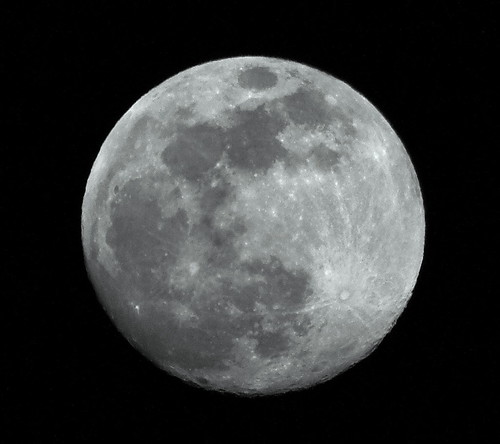
I will try tonight again for my own edification. I did some postprocessing to boost highlights. I might have overdone but
want to get it a tad bit brighter.